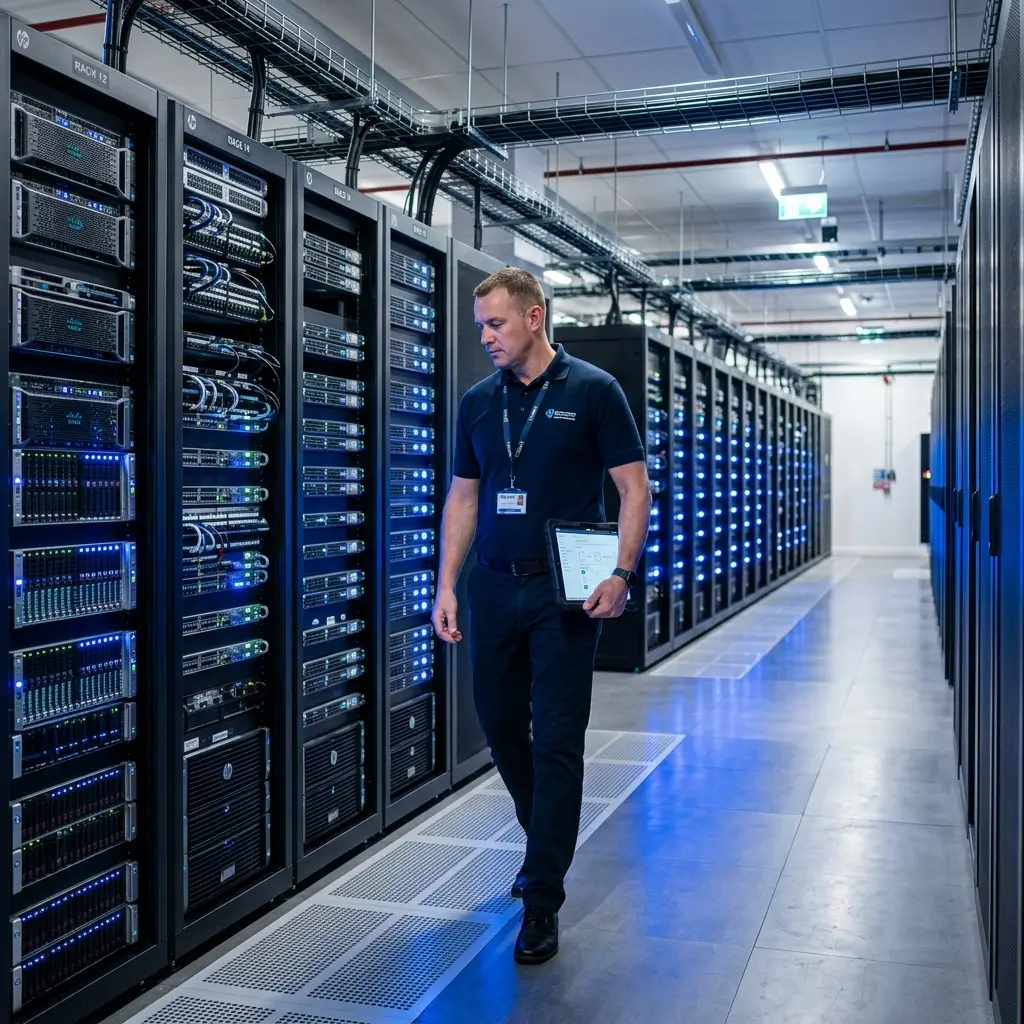
Edge computing represents a fundamental rebalancing of where computation happens. After two decades of centralizing everything into massive data centers, the industry is now pushing workloads back toward the network edge — not to local servers as in the pre-cloud era, but to a distributed fabric of compute points that are geographically close to end users and data sources.
What Edge Computing Actually Means
Edge computing is not a single technology — it is a deployment philosophy. It encompasses CDN edge functions (Cloudflare Workers, Vercel Edge, Fastly Compute), IoT edge gateways that process sensor data locally, 5G Multi-access Edge Computing (MEC) nodes hosted at cell towers, and regional cloud regions deployed by hyperscalers closer to underserved markets.
What unifies these is the goal of reducing the distance — and therefore the latency — between computation and the user or data source. For applications where 100ms of network round-trip time is the difference between a good and bad experience, edge deployment is not a nice-to-have.
Real Latency Numbers and What They Mean
The speed of light imposes hard physical limits on network latency. From a New York origin server to a user in Mumbai, the minimum one-way travel time is approximately 70ms — meaning round-trip latency cannot be less than 140ms regardless of how fast your server responds. Edge nodes in Singapore or Mumbai reduce that to under 20ms.
For user experience, the research is clear. Google's Core Web Vitals framework treats Time to First Byte above 200ms as poor. For real-time applications — gaming, video calls, collaborative editing, financial trading platforms — even 50ms of additional latency is catastrophic. Edge computing is not just an optimization; for these use cases, it is table stakes.
Edge Functions: The Developer Experience Layer
Cloudflare Workers, Deno Deploy, and Vercel Edge Functions have made edge computing accessible to application developers without deep infrastructure expertise. These platforms execute standard JavaScript/TypeScript at points of presence globally, enabling personalization, A/B testing, authentication, and API routing at the network edge with sub-millisecond cold start times.
The programming model is necessarily constrained — edge runtimes do not support all Node.js APIs, have strict memory limits, and cannot maintain long-running processes. But for the tasks they are designed for — request transformation, geo-routing, token validation, cache stamping — they are dramatically faster and cheaper than equivalent centralized processing.
Key Takeaway
"Edge computing is not replacing centralized cloud infrastructure — it is complementing it. The architecture of the next decade will be hybrid: heavy computation in centralized regions, latency-sensitive logic at the edge, and real-time sensor processing on local gateways. Engineers who understand how to design across this spectrum will have a significant advantage."
Topics